Oseberg Font: A Gothic Typeface for Timeless Branding
I was deep into a branding project for a local artisanal skincare brand when I stumbled upon Oseberg. The client wanted something that felt both authentic and refined—something that evoked the mystique of nature and craftsmanship. As a designer, I often find myself sifting through fonts looking for one that can tell a story as clearly as the product itself. When I first opened my design software and placed Oseberg on a logo mockup, I knew it had potential.
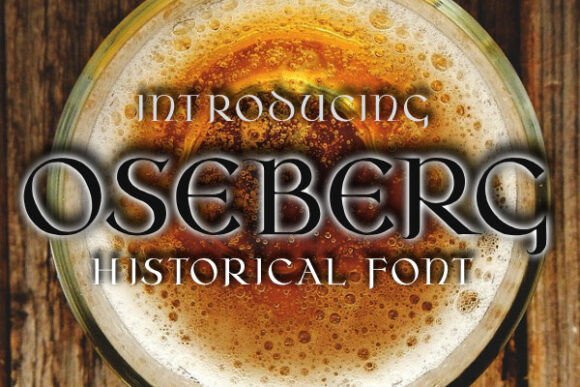
What immediately stood out to me about Oseberg is its gothic-inspired structure with subtle medieval flair. It’s not just a font; it’s a visual mood. The letters have a strong vertical presence, with elongated ascenders and descenders that give it an almost ceremonial look. Its character set feels like it’s been carved from old stone or etched into wood—a nod to Viking-era inscriptions. That kind of texture adds warmth and gravitas to any design context.
Oseberg for Logo Design and Brand Identity Projects
I started by testing Oseberg in the logo concept phase. The name of the brand was short and meaningful—just three words—and needed a typeface that could carry weight without being overbearing. Oseberg worked beautifully here. The contrast between thick and thin strokes gave the logotype a dynamic feel while maintaining clarity at larger sizes. It wasn’t too ornate, which made it surprisingly versatile for both print and digital applications.
When building out the full brand identity, I paired Oseberg with a clean sans serif for body text. This combination helped balance the heaviness of the display typeface while keeping the overall look cohesive. For packaging mockups, I used Oseberg on the front label and then scaled it down for ingredient lists, ensuring it never lost its impact but still contributed to a unified typographic system.
Oseberg in Packaging Design and Product Labels
One of the key places where Oseberg shined was on product labels. The font’s intricate details and bold presence added a layer of sophistication that aligned perfectly with the brand’s natural, handcrafted ethos. On a small glass jar, the font didn’t overwhelm—it actually elevated the perceived value of the product. I also found that using it sparingly on back-of-package copy created a nice visual rhythm without making the text hard to read.
For shop signage, I tested Oseberg in both uppercase and lowercase forms. Uppercase gave a more traditional, authoritative tone, while lowercase softened the look, making it approachable yet still distinctive. Both variations were legible from a distance, which is essential for storefronts or event banners.
Oseberg for Creative Studio Branding and Website Headers
I later used Oseberg for a creative studio’s website redesign. They wanted their homepage hero section to make a statement—something memorable and timeless. Placing Oseberg in the header instantly gave the site a unique personality. It felt like walking into a gallery space rather than just another portfolio site. The contrast in stroke weights and the slightly irregular spacing helped differentiate them from competitors who relied on modern sans serifs.
It's worth noting that Oseberg is definitely a display font, so it doesn’t hold up well for long-form reading. But in headers, taglines, and call-to-action buttons, it performed exceptionally. The team loved how it conveyed creativity and heritage, which matched their branding goals. We included it in a few accent sections for blog titles and project highlights, always ensuring there was a clear hierarchy with supporting fonts.
Oseberg in Social Media Graphics and Print Materials
Social media graphics are where many brands underestimate the power of typography. I used Oseberg in Instagram post templates for quotes and promotions, and the response was surprising. Followers commented on how “elegant” and “unique” the posts looked. The font’s ability to stand out against simple backgrounds or minimalistic layouts made it ideal for creating shareable content that felt intentional and high-quality.
Print materials such as business cards and flyers also benefited from Oseberg. On a matte-finish business card, the font gave a tactile sense of quality—like you were holding history in your hands. For flyers, I used it for headlines and kept the rest of the copy in a softer, more readable typeface. This ensured that the message was easy to digest while still being visually striking.
Oseberg for Editorial Design and Merchandise Mockups
In editorial work, Oseberg has become a favorite for title pages and chapter headings. It brings a certain gravitas to written content, especially when working with themes like mythology, folklore, or historical narratives. One of my recent projects involved designing a small booklet for a Nordic-inspired candle line. Using Oseberg on the cover and within the interior for section headers gave the piece a cohesive, artisanal feel that resonated with the target audience.
Merchandise mockups were another area where Oseberg proved its versatility. From embroidered patches to screen-printed t-shirts, the font held up well under different treatments. It’s especially effective when printed in metallic ink or embossed leather, enhancing the vintage aesthetic it naturally carries.
Practical Tips for Testing Oseberg in Your Work
If you're considering Oseberg for your next project, start by placing it in a real-world context. Try it on a mockup of a product you already know works—like a coffee mug or poster. See how it looks in both color and black-and-white. Test it at various sizes, especially if it will be used in physical spaces or large-format prints. Since it’s a display font, it needs room to breathe. Don’t use it in tiny text blocks or dense paragraphs.
Also, check what styles come with the font. Does it include alternates or ligatures? These little details can add charm and help you avoid awkward letter combinations. If you’re using it commercially, confirm the licensing terms to ensure it fits your project’s scale. Many premium fonts offer flexible options for freelancers and small businesses, and Oseberg seems no exception.
Oseberg and Font Pairing for Balanced Typography
Font pairing is crucial when using a strong typeface like Oseberg. It pairs particularly well with minimalist sans serifs or warm, organic script fonts. For a more grounded look, try matching it with a sturdy serif for body text. In one case, I used it alongside a classic Garamond variant, which created a perfect blend of tradition and modernity. The result was a brand that felt both rooted in history and relevant today.
On the flip side, combining Oseberg with a sleek, futuristic sans might clash unless done intentionally. It’s best suited for brands that want to evoke a sense of authenticity, luxury, or storytelling. Think of it as the visual equivalent of a rich, layered voice in audio—use it to anchor the experience, not to drown it out.
Real Use Cases Where Oseberg Works Best
- Logo design for niche brands or artisanal products
- Editorial design with thematic or narrative-driven content
- Packaging design that benefits from a handcrafted or historical vibe
- Shop signage and storefront branding
- Wedding invitations and special-event design
- Social media headers and promotional visuals
Each time I’ve used Oseberg, it’s brought a distinct character to the table. It’s not a background font—it’s a spotlight. And that’s exactly where it should be used: in moments where you want to create an emotional connection through typography.
Why You Should Consider Oseberg for Your Next Project
There’s a growing demand for fonts that go beyond the generic and speak directly to a brand’s soul. Oseberg does this effortlessly. Whether you're designing for a boutique, a skincare line, or a creative studio, this gothic-inspired font offers a depth that most modern Fonts can't replicate.
Its roots in ancient Nordic and Viking-era aesthetics mean it’s inherently rich in cultural nuance. That makes it especially powerful for brands targeting audiences who appreciate heritage, craftsmanship, or a touch of the mysterious. It’s a Display font that doesn’t shout but commands attention all the same.
As a designer, I’m always cautious about committing to a typeface before seeing how it behaves across different mediums. With Oseberg, the test run was smooth. It maintained consistency in color, size, and tone whether applied to a web banner, a printed menu, or a branded tote bag. That level of adaptability is rare in a font with such strong stylistic character.
Final Observations and Recommendations
If you’re looking to craft a brand identity that stands apart and tells a story, Oseberg deserves a spot on your radar. It’s not for every project—but when it fits, it fits perfectly. I recommend downloading a trial version and running it through your typical design scenarios. See how it holds up in your usual workflow before investing in a commercial license.
Remember, typography is more than just choosing a pretty font. It’s about aligning with your brand’s voice and vision. Oseberg gives you that chance to build something memorable—not just functional. So if your next project calls for a Display font with soul, history, and style, it’s time to bring Oseberg into the mix.