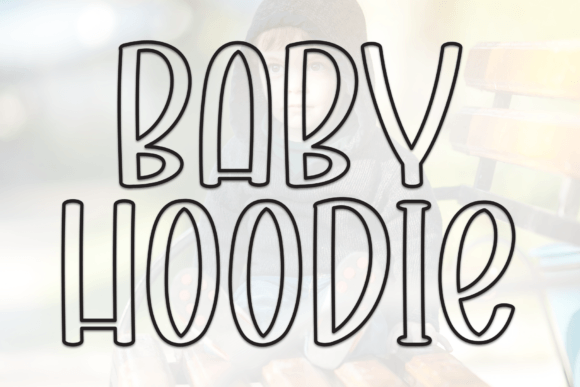
Baby Hoodie Font: A Playful Typeface for Editorial Design
As I sat down to redesign the header of a new lifestyle blog focused on family-friendly content, I found myself in need of a font that could capture both warmth and whimsy. The project wasn’t just about aesthetics—it was about creating a visual identity that resonated with parents, educators, and anyone who wanted to celebrate everyday joys with a touch of charm. That’s when I discovered Baby Hoodie, a display font with rounded, open letterforms that immediately brought a sense of playfulness and approachability to the page.
Baby Hoodie for Kids’ Content Branding and Blog Headers
Fonts have a way of shaping how readers feel before they even read a single word. With Baby Hoodie, the first impression is softness and friendliness—qualities that make it ideal for content aimed at children or families. Its outline style gives it an airy, almost hand-drawn quality, while the rounded edges suggest safety and comfort. In my test layout, using Baby Hoodie as the primary header font helped establish a lighthearted tone, perfect for topics like parenting tips, kid-friendly recipes, or educational activities.
I paired it with a clean sans serif body font for readability, ensuring that the playful energy of Baby Hoodie didn’t overwhelm the rest of the design. For those working on kids’ designs, this font offers a gentle but bold presence that can anchor your publication without being too loud.
Using Baby Hoodie in Recipe Ebooks and Printable Guides
When designing a digital recipe ebook, I often look for fonts that are both inviting and easy to scan. Baby Hoodie surprised me by holding its own in such a practical format. Its openness made it legible even at smaller sizes, which is essential for titles of sections or chapter headings in longer documents. While it’s a display font, it doesn’t lose its character when used in more structured layouts.
In one section titled “Breakfast Ideas for Busy Mornings,” I applied Baby Hoodie to the title and saw how it naturally drew attention. Readers gravitated toward the heading, and it felt like the right choice for a product designed to be printed and shared. If you’re crafting Fonts for printable guides or educational workbooks, consider how Baby Hoodie can bring a touch of fun to otherwise utilitarian text.
Baby Hoodie for Wedding Invitations and Event Design
Wedding invitations require a delicate balance between elegance and personality. While Baby Hoodie isn’t traditionally associated with formal events, its soft curves and light-hearted vibe can work beautifully for themed weddings, especially those with a whimsical or rustic aesthetic. I tested it on a sample wedding guide cover and found that it complemented floral illustrations and vintage-style elements well.
The key here is contrast. Pairing Baby Hoodie with a traditional serif font in the body copy helps maintain formality while allowing the invitation to stand out visually. This makes it a smart choice for event designers looking to create memorable Display pieces that don’t take themselves too seriously.
Baby Hoodie in Digital Magazines and Newsletter Graphics
For a digital magazine focused on creative living, I needed a font that would pop in headers but not clash with the overall design. Baby Hoodie delivered exactly that. Its open letter structure allowed it to sit nicely above images and pull quotes, enhancing the reader’s experience without distracting from the content.
On newsletter graphics, I used Baby Hoodie for the main headline and found that it worked particularly well in bright, contrasting colors. Because it’s an outline Font, there's flexibility in color choices—making it a versatile asset for social media posts, email campaigns, or editorial feature pages where visual impact matters.
Baby Hoodie for Chapter Openers and Pull Quotes in PDFs
One of the most surprising strengths of Baby Hoodie was its ability to elevate chapter openers and pull quotes in a course PDF I was designing. The open spaces in each letter gave the text a sense of movement and lightness, making it feel less academic and more engaging. It’s not a font you’d want to use for entire paragraphs, but as a decorative accent, it adds just the right amount of flair.
Readers responded positively to the cheerful mood it created, and I noticed increased engagement with the highlighted quotes. For authors and creators working on Fonts for PDF-based content, this kind of typographic contrast can help break up dense text and guide the reader through complex material with ease.
Baby Hoodie in Coaching Workbooks and Printables
Coaching workbooks and printables often rely on clear typography to support learning and action. I used Baby Hoodie selectively in a wellness coaching template for section titles and motivational prompts. The result was a friendly, encouraging interface that felt less clinical and more supportive.
Because it’s an outline Display font, Baby Hoodie also works well in layered compositions. When overlaid on photos or textures, it maintains clarity and doesn’t get lost in the background. This makes it great for printable planners or guided worksheets where visuals and text must coexist harmoniously.
Baby Hoodie for Social Media and Editorial Layouts
Social media graphics demand immediate visual appeal. Baby Hoodie met that challenge head-on. On a Pinterest-style layout for a baby fashion blog, the font added a youthful energy to post titles and hashtags. Its rhythm and spacing ensured it remained readable on mobile screens, which is crucial for platforms where users scroll quickly.
What stood out was how Baby Hoodie adapted across different editorial formats. Whether it was part of a Fonts package for Instagram stories or a part of a long-form article layout in a digital magazine, it maintained a consistent voice. That consistency is key to building brand recognition, especially in niches where emotional connection is important.
Design Considerations for Screen Reading and Print Materials
While Baby Hoodie shines in digital environments, it’s also suitable for print materials. The open letterforms prevent ink bleeding issues in lower-quality prints, and the soft curves remain intact when printed at high resolution. For screen reading, the font holds up well on both desktop and mobile displays, though I recommend avoiding it in very small sizes where the outlines might become too thin.
If you're considering Baby Hoodie for a publication, check the included styles and alternates. Outline Fonts can sometimes lack subtlety, but Baby Hoodie offers enough variation to build a cohesive visual system. Ligatures and multilingual support were also present in the version I tested, which is helpful if your content reaches international audiences.
Baby Hoodie in Creative Branding and Logo Design
A strong brand identity starts with thoughtful typography. Baby Hoodie has the potential to serve as a secondary Font in branding efforts—especially for startups targeting young families or educational products. Its personality is just right for logos that aim to be warm, welcoming, and a little bit quirky.
Though I wouldn’t recommend it as a primary logo font due to its outline nature (which can be harder to scale), it works perfectly as a supporting element. Think of it as the “accent” in your Fonts toolkit—a typeface that brings life to taglines, subheadings, or promotional banners.
Font Pairing Tips for Editors and Publishers
To make the most of Baby Hoodie, careful font pairing is essential. I found that combining it with a modern sans serif or a classic serif font created a balanced hierarchy. For instance, pairing it with Helvetica Neue for captions or Georgia for body text allowed the Display font to shine without overshadowing the core message.
Another trick I used was applying a slightly heavier weight of Baby Hoodie for titles and a lighter variant for subtitles. This subtle differentiation helped guide the reader’s eye through the content. Always test Fonts in context—what looks good in isolation may not hold up in a full layout.
Commercial Use and Licensing Clarity
Before finalizing any design project, it’s important to verify the licensing terms of the Fonts you choose. Baby Hoodie is a commercial font, so it fits well into paid newsletters, client publications, and digital downloads. Make sure to review what’s included in the font package—some versions offer additional weights or multilingual glyphs that can expand your design options.
Whether you're creating a branded digital magazine or a downloadable planner, knowing the scope of the license ensures you stay compliant while enjoying the full range of Baby Hoodie’s expressive potential.
Final Thoughts on Using Baby Hoodie in Editorial Projects
Typography is more than just choosing letters—it’s about setting the tone, guiding the reader, and reinforcing the purpose of the content. Baby Hoodie has proven itself to be a reliable Display font in various editorial contexts, from blog headers to wedding invites and everything in between. Its rounded, open-letter style conveys a sense of joy and accessibility that aligns well with family-focused, educational, or community-driven projects.
If you're looking for a Font that adds a touch of personality without compromising readability, give Baby Hoodie a try. It’s not just another Fonts option—it’s a design partner that enhances the emotional and visual impact of your work.