Korela Serif Font in Real Branding Projects
I recently had the chance to work on a branding project for a local artisanal skincare brand. The goal was to create a visual identity that felt modern yet warm, clean but inviting. As I opened my design board and started sketching ideas, I knew the right typeface would be crucial — something bold enough to stand out but elegant enough to feel trustworthy. That’s when I decided to test Korela Serif, a font that caught my eye with its promise of a minimalist, versatile design.
Testing Korela Serif on a Skincare Logo Mockup
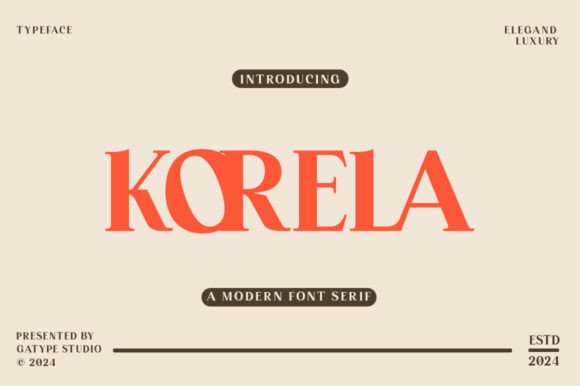
The first step was to see how Korela Serif looked in a logo mockup. I tried it on a simple wordmark — just the brand name in all caps. What stood out immediately was the font’s bold and clear structure. Each letter had a consistent thickness, which gave it a sense of stability and professionalism. It wasn’t too heavy, nor too delicate; there was a perfect balance that made it feel approachable yet refined.
I layered it over different background textures and colors to simulate potential packaging materials. Whether on white paper or a textured linen backdrop, Korela Serif held up well. The serifs added just the right amount of character without being over the top. It was the kind of font that could easily become part of a brand’s personality — subtle enough not to distract from the product, but distinctive enough to build recognition.
Using Korela for Packaging Design and Product Labels
Next, I moved to product labels and packaging design. Since this was a small business with handcrafted products, I wanted the fonts to reflect quality and attention to detail. Korela Serif performed beautifully at both large and small sizes. On a label sticker, the font remained legible even when shrunk down to 8pt, which is essential for ingredient lists and small branding elements.
I also tested it in combination with other typefaces for font pairing. A light sans serif paired with Korela Serif as a headline created a great contrast — the boldness of the serif pulled attention while the supporting text stayed easy to read. This flexibility makes Korela an excellent choice for brands that need a strong visual hierarchy across multiple touchpoints.
Observations on Readability and Brand Perception
One of the biggest challenges in branding is ensuring readability across different mediums. With Korela Serif, I didn’t have to worry about legibility issues. Its clean lines and open apertures made it easy on the eyes, whether printed on a product box or displayed on a website. I noticed how the font subtly elevated the perceived value of the brand — people tend to associate good typography with quality craftsmanship, and Korela delivered that impression effortlessly.
In terms of brand perception, Korela Serif helped shape a narrative of simplicity and sophistication. The minimalism of the font allowed the natural imagery and muted color palette to shine through, reinforcing the brand’s eco-friendly and handmade ethos. It wasn’t trying to be anything it wasn’t — just doing what a premium serif font should: grounding the brand in clarity and elegance.
Applying Korela in Digital Brand Materials and Social Media
As I transitioned into digital assets, I placed Korela Serif in Instagram posts and social media graphics. It worked wonders in headlines and short-form copy. The bold nature of the font made it pop against photos of natural ingredients, and the consistency in stroke weight meant it never looked uneven or jarring on mobile screens.
For longer descriptions, I used a lighter variant of Korela to maintain a cohesive look while keeping the body text comfortable to read. This seamless integration between display and paragraph styles is rare in many fonts, but Korela Serif handled it like a pro. It’s a testament to how thoughtfully it was designed for real-world use cases.
How Korela Works in Print and Web Headers
Printing always brings new challenges, especially when it comes to fine details in type. I ran a few print proofs using Korela Serif for shop signage and found that it retained its crispness even when scaled up. The serifs didn’t get lost in the larger size, and the font’s overall shape complemented the layout of the signboard nicely.
On the web side, I used Korela for hero headers and call-to-action buttons. The boldness ensured it was visible from a distance, and the clean edges prevented pixelation issues on lower-resolution displays. This adaptability between print and digital is a big plus for any designer working on multi-platform branding systems.
Korela for Creative Studios and Editorial Work
A few weeks later, I got another request — this time from a creative studio looking to overhaul their internal brand materials. They needed something modern that still felt professional. After reviewing several typefaces, I suggested Korela Serif for its ability to maintain a strong presence in both editorial design and digital templates.
Used in brochure layouts and magazine-style content, Korela provided a clean canvas for the studio’s photography-driven content. The font’s versatility let me use it in pull quotes, headings, and even short captions. Because it’s a serif font, it brought a level of refinement that a sans serif might have missed. But unlike more traditional serifs, Korela didn’t feel outdated — it had a contemporary edge that matched the studio’s vibe perfectly.
Font Pairing Tips with Korela Serif
One thing I love about Korela Serif is how easy it is to pair with other fonts. For a more classic look, I’ve used it alongside a traditional serif like Georgia or Caslon. For a modern twist, a sleek sans serif like Lato or Montserrat works well as a secondary typeface. If you want to add some personality, a soft script font can sit nicely beside Korela in taglines or signature areas.
When choosing your pairing, keep in mind the mood you’re trying to convey. Korela Serif is neutral and adaptable, so it can lean either way depending on what you match it with. My advice is to start with one or two complementary weights and build from there. You’ll find that Korela gives you a lot of creative breathing room without sacrificing cohesiveness.
Practical Advice for Testing Korela Before Committing
Before committing to Korela Serif for a full brand system, I recommend testing it in a few key scenarios. Try it on a logo mockup, a business card layout, and a short paragraph in a newsletter template. See how it behaves in motion — does it hold up on screen? Does it feel right in print?
Also, check if the font includes the necessary alternates and ligatures for your language needs. In this case, Korela had solid multilingual support, which was important since the client planned to expand to neighboring markets. File formats were available in both desktop and web versions, making it easy to integrate into various workflows.
If you're planning to use it for commercial projects, make sure to review the licensing options. I found the commercial font license for Korela to be flexible enough for most branding applications, including digital storefronts, packaging, and promotional materials.
Why I Recommend Korela for Branding Projects
Korela Serif isn’t just another font in your toolbox — it’s a reliable partner for building a thoughtful brand identity. From logos to packaging, from web headers to printed brochures, it maintains its integrity across every format. It’s a modern serif that doesn’t compromise on style or functionality.
What really sold me on Korela was how quickly it became a central part of the design story. It didn’t demand attention, but it earned it through subtlety and strength. If you’re working on a project that needs a font with clean lines, bold presence, and real-world adaptability, give Korela Serif a try. You might just find it’s exactly what your next brand needs.
Korela in Merchandise and Marketing Assets
Merchandise design often gets overlooked in early branding stages, but it's where the font truly shines. I used Korela Serif on tote bags, stickers, and even custom coffee mugs for the skincare brand. The bold, minimalist style translated well to these surfaces — no matter how far away someone was standing, they could clearly read the message.
For marketing materials like flyers and posters, the font’s consistent stroke weight helped maintain visual harmony. I could scale it up for headlines and down for body text without worrying about inconsistency. And because it’s a modern serif, it avoided the stuffy, old-school feel that some similar fonts carry. It was fresh, but grounded — exactly what the client needed to feel current and credible at the same time.
Final Thoughts on Using Korela in Real Client Work
Working with Korela Serif reminded me why I choose fonts based on practicality as much as aesthetics. It wasn’t just about finding something pretty — it was about finding something that could work hard and look good doing it. In this project, Korela did both.
If you’re a designer or brand owner looking for a font that can handle everything from logos to long-form copy, consider giving Korela Serif a shot. It’s built for real use, and that’s exactly what sets it apart in a sea of generic typefaces.